A few words
about blister beetles. Most equine owners know to check hay for the
beetles, as they can cause serious health hazards. Their defensive
secretion of a blistering agent, cantharidin (orange or yellow fluid). About 7,500 species are known worldwide. Many are
conspicuous, and some are brightly colored, announcing their toxicity to
would-be predators.


Blister
beetles are my nemesis. As an organic gardener, I've learned to
carefully stomp them. But today we were invaded by thousands as they
attempted to reproduce. I had to spray with roach killer and emptied the
large can with many still crawling or flying toward the
garden. And they eat anything! A horde of these beetles can completely defoliate a mature tree in one day!
Their only enduring trait is that they lay their eggs in areas surrounding grasshopper eggs. The immature stage (larvae) feed on these grasshopper eggs.

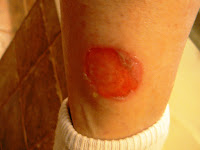
WARNING. If you unknowingly brush against one of these beetles (as I did in 2008), the results can be terrible. I was just cleaning out an old hen house that I wanted to make into a tool shed. The next day, my ankle itched, and I noticed swelling. The doc and I decided not to puncture or lance the growing blister due to possible infection. Instead, I covered and let it go down on its own. Four months later, it shed its skin. I continued to cover and treated for protection and cleanliness. Thus, I dislike the crusty creatures.


