Showing posts with label health. Show all posts

Tuesday, May 16, 2023

Tastier Jams and Jellies


Are you tired of jams, jellies, and preserves that are too sweet and have no fruit flavor? 

Here is my technique for creating delicious fruit preserves in just minutes.

Apricot jam with extra fruit
 

To begin, select a good brand of fruit jam in your favorite flavor. I especially enjoy apricot or peach, but the sugar flavor is always too strong, while the fruit flavor is, “blah”. I also look for preserves that have no high fructose corn syrup. Below is my recipe for creating tastier jams and jellies. These are so flavorful; you can even use them for gifting.


INGREDIENTS:

 1-3 jars of your favorite preserves.

2-4 pieces of fresh, fully ripened fruit. If out of season, canned fruit works well. Wash fresh fruit and remove seeds (if needed). Peel if you wish and chop fruit into tiny pieces. If using canned fruit, be sure to use a well-packaged, flavorful brand. 

 DIRECTIONS:

Put preserves in pan and heat slowly at low temperature. This will turn the preserves into a thick liquid. When warm, gently stir in chopped fruit. Increase temperature slightly and continue cooking for about 10 minutes, or until all the fruit is blended and warm. Do not boil. Remember, your preserves already contain pectin or other thickener.

Pour into jars, cool, and refrigerate. (After you open any jar of preserves, please store in refrigerator). Your new, extra fruity preserves may be slightly thinner, but not much. The best part is that your jams and jellies will be healthier and taste more like real fruit, not sweetened candy.

NOTE: If you wish, try canning the preserves in your own jars and use for gift giving. (Follow safety directions for preserving jams and jellies).

Sunday, September 5, 2021

Blister Beetles (My Bane)

A few words about blister beetles. Most equine owners know to check hay for the beetles as they can cause serious health hazards. Their defensive secretion of a blistering agent, cantharidin (orange or yellow fluid). About 7,500 species are known worldwide. Many are conspicuous and some are brightly colored, announcing their toxicity to would-be predators.
Blister beetles entering our garden
Blister beetles are my nemesis. As an organic gardener I've learned to carefully stomp them. But today we were invaded by thousands as they attempted to reproduce. I had to spray with roach killer and emptied the large can with many still crawling or flying toward the 
garden. And they eat anything! A hoard of these beetles can completely defoliate a mature tree in one day!
 
Their only enduring trait is that they lay their eggs in areas surrounding grasshopper eggs. The immature stage (larvae) feed on these grasshopper eggs.
 
Blister beetle

 
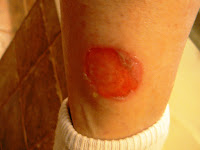
 WARNING. If you simply brush against one of these beetles unknowingly (as I did in 2008) the results can be terrible. I was just cleaning out an old hen house that I wanted to make into a tool shed. The next day my ankle itched and I noticed swelling. The doc and I decided not to puncture or lance the growing blister due to possible infection. Instead, I covered and let it go down on its own. Four months later it shed its skin. I continued to cover and treated for protection and cleanliness. Thus my dislike for the creatures.

Current Work

The Write Words

I found a comfy chair and was writing at the Chino Valley Library , engrossed in finding the right words. After an hour of working on a c...