
Friday, March 22, 2024

Sunday, February 18, 2024
New Canine Companion
 We adopted a new dog on Friday, 2/16/24. It was time. Grace (now Tilly) has some health challenges and was transferred from Gallup, NM to High Country Humane in Flagstaff. She's quite a cutie, and can't stop wagging her tail (see photo) and licking us. An Australian shepherd mix, she was only 27 lbs when High Country did their intake 3 weeks ago & today is 41lbs. We're feeding her 3/day and now able to cut back to a reasonable amount of food. So far, we haven't found anything she will not eat.
 She was food deprived (probably on the streets for a while) and likes to eat fast & run away. To slow down her eating, and instead of buying a fancy slow-eat bowl, I put a big river rock in the middle. Works like a charm😂

 |
Saturday, February 10, 2024
The Write Words
I found a comfy chair and was writing at the Chino Valley Library, engrossed in finding the right words. After an hour of working on a chapter of my debut novel, The Goodlands, I was hackneyed for a fresh idea and I needed the plot to take a deadly turn.
 |
Yep, this is definitely the time and place. Now...how shall I have my villain die?
Thursday, February 1, 2024
Elk-Proof Fence That Works!

Traditional Elk Fencing. Most elk fencing used in
Alaska, Arizona, Colorado, Idaho, New Mexico, Colorado and throughout the West
measures 7’-8’ tall. Past experience stipulated that going to
greater heights or electrifying the fence was the best way to elk
and deer out of a designated area. Federal and state agencies use high fences to
protect highway frontage, pastures, and elected land. This fencing can be
expensive, time consuming and difficult to install, and may not be ascetically
appealing for homeowners.
Elk Proof with Double Fence. We have another fence
design that is simple, well designed, long lasting, environmentally friendly, and attractive. It is a barrier that offers another path toward elk and deer
proofing your precious landscaping and gardens. No tall fencing is needed, just
smarter fencing. Simply, it consists of two fences – four feet tall and four
feet apart.
Our first attempt to create a garden for our family gave us
plenty of wildlife experiences - but no vegetables. The rabbits, gophers and
especially deer and elk destroyed the plants before they grew large enough to ripen.
Sometimes the elk would just walk around in the garden, tasting everything, and
never actually eating anything. They trampled everything, thus ruining hard
work in our garden. The first attempt at garden fencing was a 4 ft tall
vintage, looped wire design. It was beautiful, but useless when it came to elk.
Our bedroom overlooked the flower and vegetable garden, so we
kept our window slightly ajar and listened for the invaders throughout the
night. Using this technique, we harvested plenty of sleep deprivation, and
gained an education into the nocturnal habits of Rocky
Mountain elk (Cervus elaphus
nelsoni).
Observing these large, horse-sized creatures trying to enter
the garden always followed a precise well-learned process, and was usually
instigated by cow (female) elk. Below are the methods they use:
Sizing up the fence. First
the elk push against the fence. This tells the elk how tall and how sturdy the
fence is built. Elk prefer to enter a garden or yard by simply muscling their
way into the structure. It's safer for them and they aren't as likely to get
tangled in wire or fencing material. If the fence is not extremely strong
(which many are not) this is a fastest way for the large creatures to get to potential
food.
Fence Jumping. If the elk
are unsuccessful at pushing a fence down, they will attempt to jump from a
standing position. The jump is usually easy for them, even at heights of 6 feet
or more. Watching these creatures jump a fence looks quite effortless. In
reality, they jump only after careful consideration and sizing up the height
and width. If they have jumped the fence in the past, elk biologists have told me that the animals have a way of remembering it. As they jump, many elk will “tap”
the top of a fence line with a hind foot when they jump. When I heard this,
I watched them closely, and many elk certainly do tap fences, especially the
cows. Experts believe their brains “remember” each fence in their territory and
store its height for reference when fleeing predators.
Repeated process. Each
night, the elk started their practiced routine: pushing, bumping, leaning, and
finally jumping into forbidden area. The elk would enter and exit the garden on
the same side, always on the farthest side from the house.
Think Outside the Fence. After
reading a pioneer Alaskan’s advice on moose fencing, and watching the elk purge
our garden night after night, we decided to add another fence outside of the
original garden fence. We outlined the fence so that it was 4 feet away from
the first one. It was made from cedar poles with 3 rails, measuring about the
same height, 48 inches. The results were immediate and unfailing. We had one
elk purge the garden fence in 5 years. We left the gate open and she was actually
“trapped” between the 2 fences.
Size Matters. Elk do not
like being restrained in small spaces. They will enter a small area if they can
quickly escape - but as prey animals, if they cannot flee, they do not feel. This game animal behavior is the basis for the double fence design. Our
specifications are below.
I Install the 48-52” high inside
fence first. This fence works best if it is made of livestock wire. Our
garden was 25 feet square (25’ x 25’ x 25’ x 25’). We do this because we can purchase a 100 foot roll of fencing. You could have some left over. You will
nee to plan ahead for a gate and we left the tops of posts high - up to 72”
tall. These tall posts create nice spaces for bird houses, gathering baskets
and other garden décor.
Measure 4 feet from inside fence,
and then install the outside fence. (We originally determined this space
with one of our horses as a model, standing her between the proposed outside
and inside fences. She’s a big mare, and 4 feet was tight for her, so we
decided to use the dimensions for our fence separation).
Use split cedar, three-rail or
wooden slats for outside fence. This fence should be minimum 48” tall. The tops
of the 6 foot posts should be set at about 50”, placing them about 22” deep. Pack
and tamp them well. The sturdiness of the posts is crucial. Elk will not jump into the
alleyway that is created between the two fences and therefore do not get into
your garden.
Garden Access. We took an
extra step and created a walk-through arbor into the garden with a gate at the
second fence. We never had an elk able to walk into the from arbor.
Important Note: if your two fences are different, elk pay
better attention to them. I believe they view them as two obstacles instead of
one.
Prettiest Wire Fence. I love vintage style wire
fences, especially the double looped, cottage style, garden wire that surrounds
old homes in small towns. Many gardeners are re-stretching the old wire and
buying reproduction wire from new manufacturers. The double loop design can be
important because the bottom half of the wire is smaller and will discourage
rabbits and large rodents.
Updated and republished from 2013
C Haese, copyright 2024
Poetry from 1964 onward...
As a very, young girl I loved poetry and found myself writing it often. Back in the day - it had to rhyme. Here are some examples of my Poetry From The Past. Old fashioned style with lots of rhyming words, but the words are all mine.
__________
Lunch Break
What a nice thing to do...
Sit on the grass
and read poetry
with a friend,
until the sun
and time,
chase the word-songs away.
Maybe another day.
© 1/1/1964
⬳
Colorado
your sandstone pillars
cradle a river of time,
Protecting her,
beckoning her,
on a transient path
until at last...
She is introduced to
an ocean of treasures.
© 8/4/1993
⬳
Dust Storm
If the giant pillars of gray earth
that swallow the earth so swiftly
ceased to be,
Would the quiet coolness
of an early morning
continued to whisper peace?
If the desert flowers
never were draped with
a mask of silt gone astray,
Would the rain that cleanses their delicate faces,
be precious, or perhaps
even seen?
Maybe the walls of speeding dust
were sent not to blow away,
but to give.
To replenish - fulfill
to create a grand stage
for life to be lived as truth.
Were there no mighty storms of dust
some lives would never pause.
The force of the moment
gives time for reflection,
and thanks
for the hours of life.
© 9/7/1991
⬳
Until The Dawn
Tired little bird
With head under wing,
Sleeps silent now...
No
longer
he
sings.
Hid by dark shadows,
Thick branches his bed
Sleep tiny creature
The
night
lies
ahead.
© 1990
⬳
CYNIC'S PRAYER
Give me Lord my just rewards
CYNIC'S PRAYER
Give me Lord my just rewards
Guide me through the dark.
Protect me
from this evil day
When I do
wrong
Look the
other way.
Give my
family love
and long
life
Make my
children grow up right.
And just a
reminder
I'll mention this too
Don't call me -
I'll call you...
Thursday, December 14, 2023
Southwest Bean Poles


Every year, as we plan our garden, we look for better ways to design and improve. We always plant beans and bush varieties are easy to harvest, but a couple of heirloom favorites still require climbing space. Our beloved pole beans are: Kentucky Wonder, Scarlet Runner, Painted Lady, and a 1930 Ozark purple bean. We plant these for the flavorful beans and colorful flowers. The red, white, pink and yellow flowers attract hummingbirds and nectar loving birds and insects.
A Creative Pole Bean Structure. When you want to create structures for sprawling beans, it can be challenging and construction can be labor intensive and expensive. Winter is hard on untreated wooden stakes. Metal posts can detract from natural, woodland settings, and pre-built climbing cages can be costly.
Over twenty years ago we found the perfect material for constructing poles and cages for beans and other climbing vines. Once dried, the Southwest succulents called Agave (a-gaugh-vē) parryi are now our building material of choice. The tall candelabras with dried flowering tops are ideal structures that last for years.
What is Agave? Agaves have been used by native people for food, fiber, and ornamentation for hundreds of years. The plants are popular with landscapers and gardeners in warm climates. Gardeners use agaves in low water gardens, which adds stunning green and blue colors, texture, and style to landscape design.
When the agave completes its blooming season, the
tall candelabra-like branch or mast (sometimes up to 15 feet high)
collapses on the ground. In our mountainous area of New Mexico and Arizona, heavy snowfall in the mountains
can also cause the blooms to topple.
A Good Way to Recycle. Since the agave poles
are made of dried, natural fiber and wood they can become tall, elegant
displays – even before the plants climb to the top. They provide excellent
perches for insect eating birds, especially flycatchers and bluebirds, which
dive and hunt from these lookouts. As the poles become covered with plants or vines, children can have fun in the teepees, playing hide-and-seek, while
searching for beans to pick. It can be a great way to build a natural “fort”
for the kids.

When you’re done with the bean poles, simply fold for re-use the next year. Mother Nature and I love to recycle in the garden and these agave poles help the process. After about 3-5 years (depending how you store them, they recycle nicely in the compost bin!
How to Harvest Agave Poles
- Find an area where agave grows abundantly.
- Wear a long sleeved shirt and heavy gloves - watch for the plant’s heavily armed spears on the ends of each succulent leaf.
- Use a serrated saw or pruning branch cutters to harvest and trim the dead blooms.
- Shake dirt, seeds and other debris from the poles before removing from its original site.
- Since the poles are lightweight, secure them in truck bed. They are long (tall) and usually won’t fit in a car.
- Divide the agave poles into piles of similar lengths.
- Choose four that are approximately the same length and lay on the ground together.
- Join them loosely together with a piece of wire or jute string at the top, just below the lowest bloom.
- Slowly stand and open the teepee of poles, then secure wire at the top. I like to do this in the garden space to make it easier. Once the beans cover the poles the structure will need to support more weight.
- Bury each pole several inches into the ground and level in place.
- Plant beans in a circle around the base of each pole (about 2” apart).
- Create a basin or well around the bean poles to allow the seeds and plants to soak up water as they grow. You can install drip hose around the base of teepee if you prefer.
- As the beans grow, it is necessary to train the beans against the poles with loose fitting jute or gardening ties. After the vines reach the top, the plants will grow easily on their own – climbing around the poles to form the teepees.
- When the pole beans have taken “hold” – you can also sow sister plants (squash, pumpkin, tomatoes, or greens) in the center of poles. These will grow outward toward light. from the middle.
| |
Regulations for Gathering Agave Poles. It’s important to check with the USDA-USFS to see if a permit is required in your area to gather the dead (and fallen) agave wood. If so, it can be considered "free-use" or similar to obtaining a permit for gathering pine cones, seeds or branches. The cost should be minimal (but could be as much as $20) to harvest the dead masts. These permits may only be valid for 30 days, so plan ahead.
Thursday, November 9, 2023
Makes Perfect Sense, but...
... when you've been a birder all your life, and you're a senior, "unlearning" and "relearning" can be challenging. I mentally made a list of my common garden birds that will be renamed, and I must admit I'm a bit saddened. I am also anxious to see what their new names will be. If you haven't heard about the changes, click on the link below.

I understand the concerns and look forward to many new birds I've seen before.
Wednesday, November 1, 2023
Where's the winter weather?
It's not here right now, but soon (we hope).
Here are some reminders of winter's beauty.
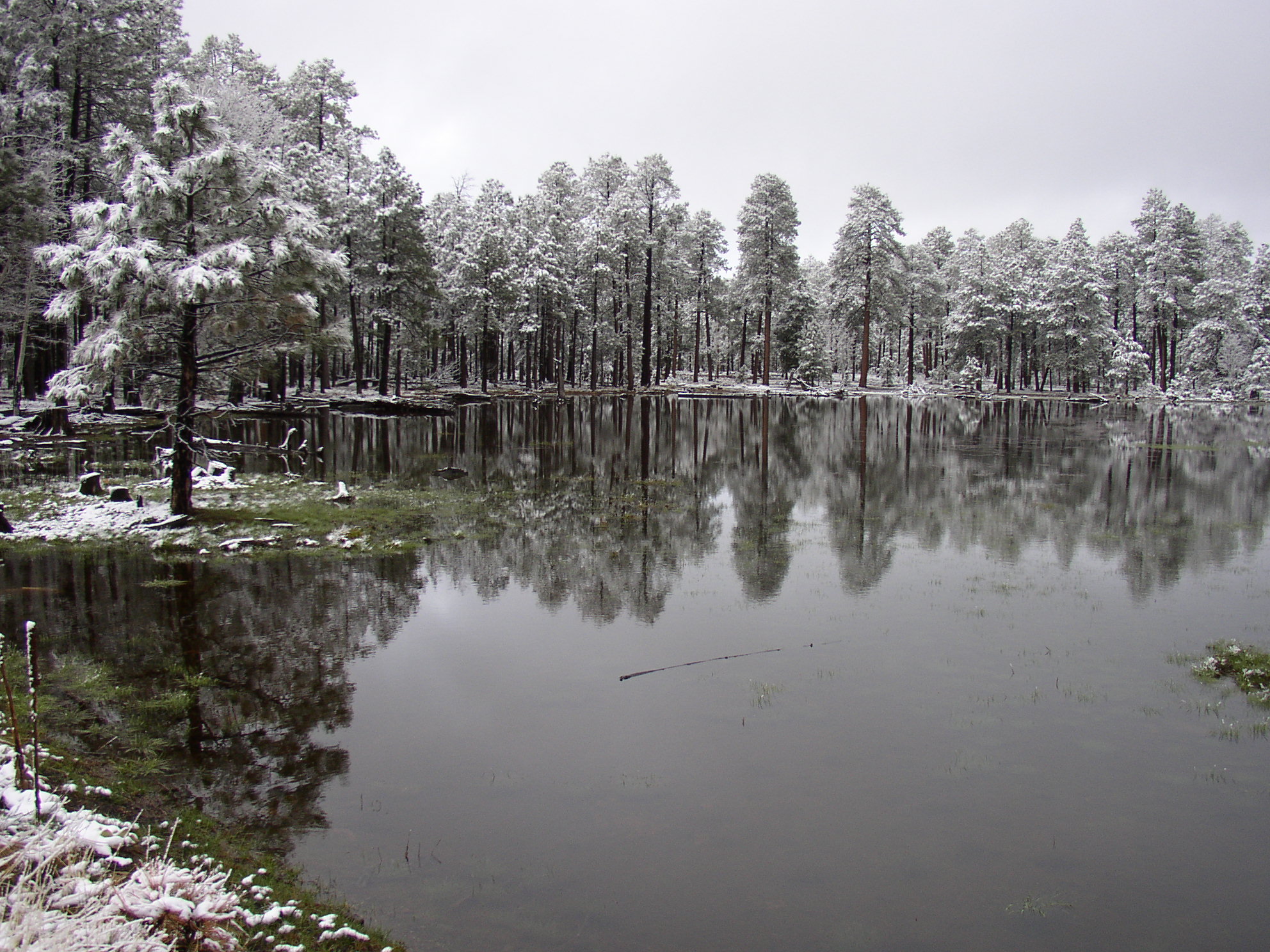 |
| The Mogollon Rim (2010) |
 | |||||
| On Escudilla Mountain (2021) |
Tuesday, September 19, 2023
Beep-Beep
 |
| The Greater Roadrunner |
This is not our state bird, but they can be found almost everywhere in Arizona. This is the largest one I've ever seen. We live at 7500' elevation and he's been hanging around the water and bird feeders. I've read reports of them traveling at speeds of 26 mph, but our visitor is calm and looking for a meal. I also learned that there can be a large die-off of roadrunners in the winter. We have had cold temps, but no precipitation so water is very important right now. Our stream running across our property is freezing until late morning, so we dutifully fill our 3 birdbaths with warm water every morning.
Thursday, August 31, 2023
Native Wildflowers
 |
| Wild, Perennial Four O'Clock |
 |
| Wild Four O'Clock with Beeweed in Center |
The native wildflowers touch my heart and easily seem to bring such beauty to our lives. One of our favorites is the Desert Four O'Clock (Mirabilis multiflora).
This is a native perennial that spreads seeds across our land. There is a single, large tap root that holds its place until spring and summer monsoon rains. Since we live on the side of a mesa, we are amazed at their strength, with lush green leaves and gorgeous 4-5 ft wide mounds of fuchsia, trumpet style flowers. As the plants dry out, the tumble off the root, allowing the seeds to distribute themselves down the hill.

Friday, July 7, 2023
Drought and Elk
Drought season is upon us, bringing late starting monsoons and plenty of extreme heat. We traveled to Alpine, AZ this morning to check out some landscaping materials. Along the way, we saw several herds of elk, close to town, and even closer to much needed, precious water. Most were cows with calves, just like the ones that come in to water along our creek.

 |
| Alpine, AZ city pastures |
 |
| Across highway from Luna Lake |
 |
| Wetlands of Luna Lake |
Subscribe to:
Comments (Atom)
Current Work
The Write Words
I found a comfy chair and was writing at the Chino Valley Library , engrossed in finding the right words. After an hour of working on a c...

-
 The storm delivered just as the meteorologists predicted. It's very, very cold today, even though the sun is shining. Snow is trying to ...
 -
 Copyright 2013 Elk Proof Fence For Your Garden Traditional Elk Fencing. Most elk fencing used in Alaska, Arizona, New Mexico...